

Outdoor Pedestal Lighting: 4 Control Options Compared
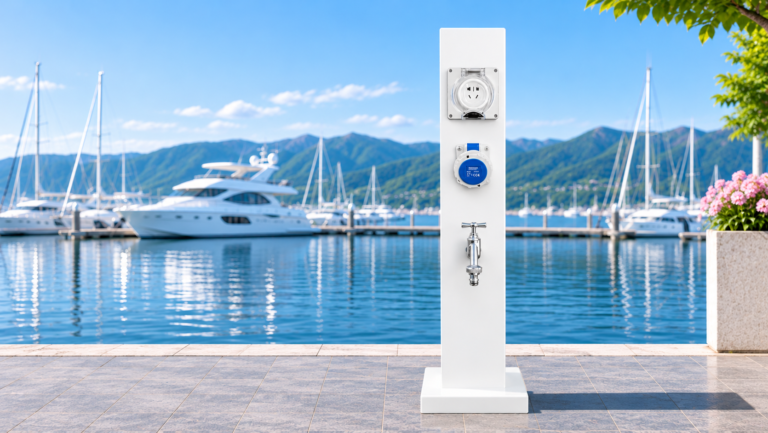
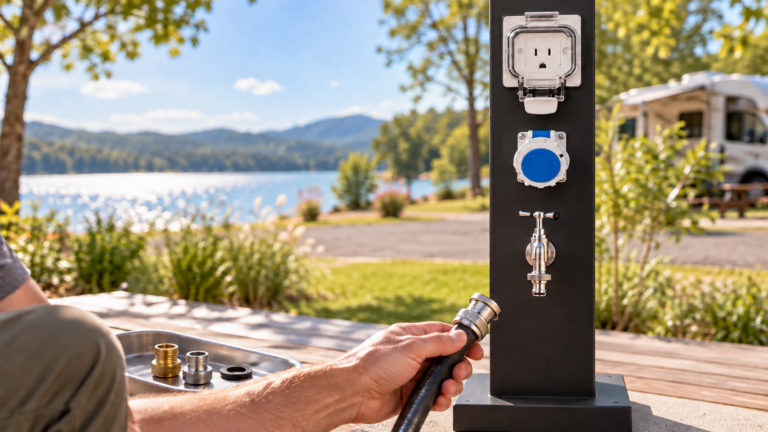
Outdoor pedestal lighting combines a useful light source with an outdoor power or water connection point. It can help users locate the pedestal and its controls after dark while keeping several functions within one housing.
However, the way the light operates matters as much as its appearance. Some users want a simple manual button. Others prefer automatic operation or control through a compatible WiFi setup.
This guide compares four options: button control, photocell control, motion-sensor control and WiFi smart control. It also explains which details to confirm before choosing a configuration.
Outdoor Pedestal Lighting at a Glance
| Control option | What activates the light | Main consideration |
|---|---|---|
| Button | A user operates the button | Someone needs to switch the light as required |
| Photocell | Changes in ambient light | Sensor position and surrounding lighting |
| Motion sensor | Detected movement | Detection area and illumination duration |
| WiFi smart control | Commands through a compatible control system | Network coverage, setup and supported functions |
These are selectable configurations. Do not assume that every pedestal includes all four controls or that they can be combined without technical confirmation.
Explore our outdoor power and water pedestals with lighting to discuss the configuration for your project.
1. Button-Controlled Pedestal Lighting
Button control allows a user to operate the light directly at the pedestal.
This option may suit private gardens, supervised outdoor facilities and locations where staff prefer to decide when lighting is needed.
Why Choose Button Control?
- Direct operation at the product.
- No phone or network required for normal use.
- Suitable when lighting is needed at specific times.
- Straightforward for users who prefer a physical control.
The operating behavior should be confirmed before ordering. Depending on the selected controller, a button may provide a maintained on/off function or trigger a timed lighting period.
For shared sites, consider who will operate the button and whether the light might remain on after the area is no longer in use.
What to Confirm
Specify the button position, intended operation and whether a timed function is required. These details help the supplier identify a suitable control arrangement.
2. Photocell-Controlled Pedestal Lighting
Photocell control, also called light-sensor control, responds to the brightness around the sensor.
A suitable configuration can switch the light on as the surroundings become darker and off when daylight returns. This makes it an option to consider where routine nighttime lighting is wanted.
Where Photocell Control Can Be Useful
- Campsite service points.
- Garden utility areas.
- Holiday cabin grounds.
- Outdoor connections used after sunset.
Photocell-controlled outdoor pedestal lighting reduces the need for daily manual switching. However, it responds to the light reaching the sensor, so placement matters.
A deeply shaded position may behave differently from an open location. Nearby building lights or light from the pedestal itself can also affect the sensor if the arrangement is unsuitable.
What to Confirm
Ask about the sensor location, switching behavior and any available settings. Explain whether the pedestal will be installed in open space, beneath trees or beside other lighting.
3. Motion-Sensor Pedestal Lighting
Motion-sensor control activates lighting when movement is detected within the sensor’s operating area.
This can suit places where illumination is wanted during visits rather than continuously throughout the night.
Possible applications include occasional-use garden connections, cabin service points and maintenance areas.
Why Choose Motion-Sensor Control?
- Lighting can respond when someone approaches.
- Users may not need to locate a button in the dark.
- The light can switch off after the configured period.
- Suitable for areas with intermittent activity.
Detection performance depends on the selected sensor, its placement and the surrounding conditions. Avoid choosing a configuration based only on a stated maximum detection distance.
Consider where people approach from, whether nearby traffic could trigger the light and whether planting or structures could obstruct detection.
What to Confirm
Discuss:
- Detection range and angle.
- Sensor orientation.
- Time the light remains on.
- Whether operation is restricted to dark conditions.
- Whether settings are fixed or adjustable.
A motion-triggered light may be useful at a service point, but an area requiring continuous illumination should have a lighting arrangement designed for that purpose.
4. WiFi Smart-Controlled Pedestal Lighting
WiFi smart control provides lighting control through a compatible network and application setup.
It may suit owners or site operators who want to operate the light without walking to the pedestal. However, the available functions depend on the controller supplied.
Remote switching, schedules and other functions should be confirmed individually rather than assumed from the word “smart.”
What to Check Before Choosing WiFi
Network coverage: Check the signal at the actual pedestal position. Indoor coverage does not establish that a connection will work reliably across an outdoor site.
Network compatibility: Confirm the controller’s supported WiFi band and network requirements.
Application and account: Ask which app is used and how the device will be set up and managed.
Connection loss: Confirm what happens if the network or internet connection becomes unavailable, including whether local control remains available.
Multiple devices: If a site has several pedestals, discuss device naming, user access and any supported group-control functions.
WiFi-controlled outdoor pedestal lighting should be selected around the site’s actual network conditions and operating requirements.
Which Control Suits Your Installation?
Start with how the location is used, then compare the controls.
| Installation need | Option to consider | Detail to review |
|---|---|---|
| User wants direct local operation | Button | Button behavior and position |
| Light should operate routinely after dark | Photocell | Sensor exposure and nearby lighting |
| Light is needed when people approach | Motion sensor | Detection area and lighting duration |
| Operator wants app-based control | WiFi | Network coverage and supported functions |
| Occasional garden maintenance | Button or motion sensor | Access and frequency of use |
| Shared campsite service point | Photocell or another site-approved arrangement | Required operating hours and lighting plan |
| Holiday cabin utility point | Photocell, motion sensor or WiFi | Guest use and management preferences |
There is no single best option for every project. A manually operated garden pedestal and a shared campsite service point may need different lighting behavior even when their housings look similar.
Confirm the Light Output and Appearance
The control method determines when the light operates. It does not determine how much light the product provides.
Before approving outdoor pedestal lighting, also confirm:
- Light-source position and direction.
- Rated power and available output information.
- Light color or color temperature.
- Whether the source is visible from nearby windows.
- Access for maintenance.
- Whether the light is intended for identification, local illumination or another purpose.
A small integrated light may help users find the pedestal without being sufficient to illuminate the surrounding area. Review the wider lighting requirements separately.
For campsites and cabins, consider the effect on nearby guests. Positioning and light direction can be as important as the control choice.
Does Lighting Control Also Control the Sockets?
Not necessarily.
A button, photocell, motion sensor or WiFi controller specified for the light should not be assumed to operate the pedestal’s electrical outlets.
State whether your request concerns:
- Lighting only.
- Electrical outlets.
- Both functions through separately confirmed controls.
The wiring arrangement and component ratings must match the agreed scope. Remote outlet switching, metering and payment systems require their own technical review.
What to Send When Requesting a Quotation
Use this checklist to describe the lighting configuration you need:
| Item | Your requirement |
|---|---|
| Product model | __________ |
| Installation country and site type | __________ |
| Quantity | __________ |
| Preferred control | Button / photocell / motion sensor / WiFi |
| Required operating behavior | __________ |
| Preferred light color | __________ |
| Available electrical supply | __________ |
| Installation surroundings | __________ |
| Motion-sensor settings, if required | __________ |
| WiFi coverage and network details, if applicable | __________ |
| Manual override requirement | __________ |
| Socket and water connection requirements | __________ |
For a larger campground purchase, our RV park pedestal RFQ checklist covers the other information needed for a quotation.
The controller and assembly scope can also affect the price. Read our power and water pedestal cost guide when comparing different configurations.
Discuss Your Outdoor Pedestal Lighting Configuration
Zhejiang GuaiChong Intelligent Technology Co., Ltd. offers outdoor power and water pedestals with selectable lighting controls, including button, light-sensor, motion-sensor and WiFi options.
Send us your preferred product, installation location and desired operating behavior. We can review the requested configuration with our technical team and confirm the available options for the selected model.
Contact us to discuss your pedestal lighting requirements.
Frequently Asked Questions
What are the four outdoor pedestal lighting controls?
The four options discussed here are button control, photocell control, motion-sensor control and WiFi smart control. Availability and operating behavior depend on the selected model and controller.
Does photocell control switch the light on after dark?
A suitable photocell configuration can operate according to ambient brightness. Confirm the switching behavior and sensor position before ordering.
Does motion-sensor lighting work only at night?
That depends on the controller. Some arrangements include an ambient-light condition, while others operate differently. Specify nighttime-only operation if required.
Can I adjust the motion sensor’s range and lighting duration?
Some controllers offer adjustments and others use fixed settings. Ask which parameters are available on the proposed configuration.
Can I operate WiFi lighting from my phone?
A compatible controller and application can support phone-based operation. Confirm the app, network requirements and available remote functions before ordering.
What happens if the WiFi connection is lost?
Behavior varies by controller and setup. Ask whether the light retains its state, follows stored settings or supports local operation.
Can all four controls be installed together?
The four options are presented as alternatives. Any combination, override or priority arrangement must be reviewed and confirmed by the technical team.
Does the light controller switch power to the sockets?
Do not assume it does. Lighting and outlet control are separate requirements unless the approved configuration explicitly includes both.
Can different pedestals in one order use different lighting controls?
You can request different configurations. List the quantity and control requirements for each version so that feasibility and pricing can be confirmed.