
RV campground power and water hookups
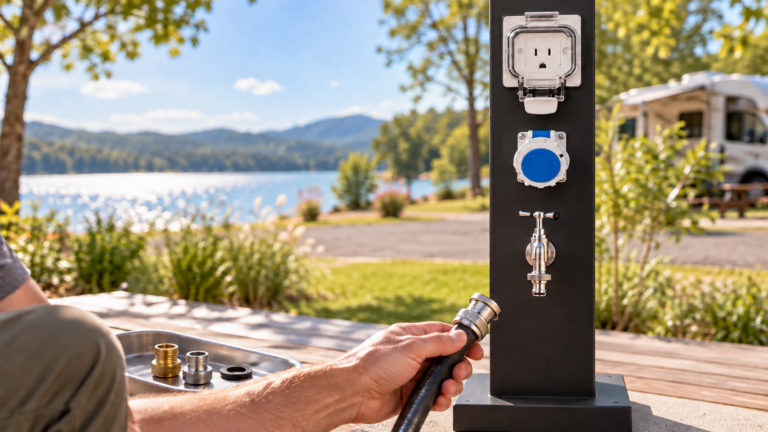
Planning RV campground power and water hookups is an important step when developing a new campsite.Their placement affects how guests park, connect their vehicles, and move around each campsite. It also influences installation work, maintenance access, and the specifications you need when ordering equipment.
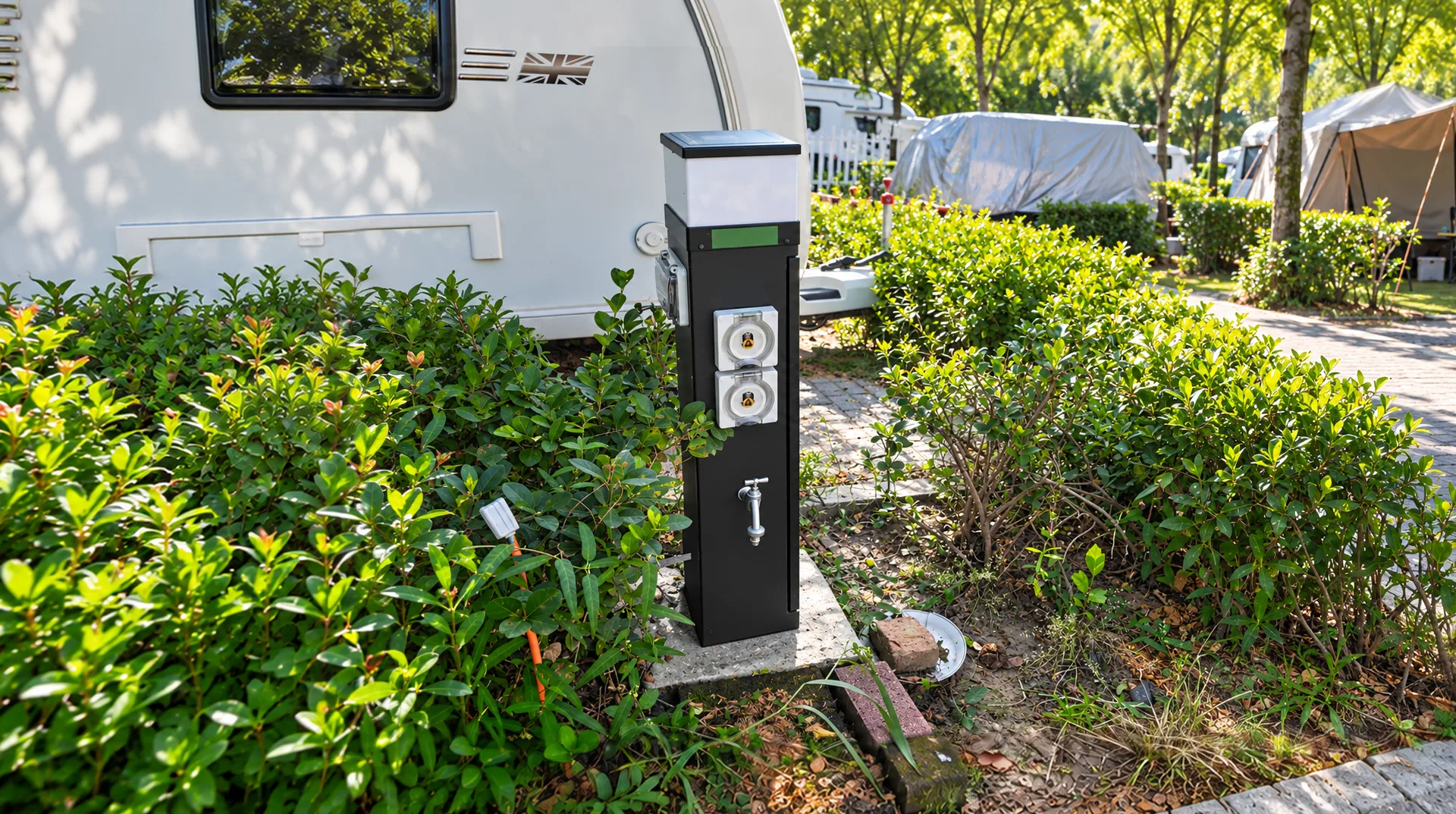
An RV power and water pedestal brings electrical outlets and water connections together at a designated service point. However, choosing the right pedestal starts with understanding your campground layout and the vehicles you expect to accommodate.
This article explains the key information to confirm before purchasing utility pedestals for a new RV campground or an additional camping area.
1. Define Which Campsites Need Power and Water
Start by identifying the types of sites included in your project. A campground may contain several accommodation areas with different service requirements.
| Site Type | Questions to Confirm During Planning |
|---|---|
| RV sites with power and water | What electrical connections and water outlets will each site need? |
| Full-hookup RV sites | How will electricity, fresh water, and a separate sewer connection be arranged? |
| Tent camping areas | Will guests use individual electrical points or shared service points? |
| Glamping or cabin areas | Which services are supplied directly to the accommodation, and which are needed outdoors? |
| Future expansion areas | What space and infrastructure should be considered before the initial work is completed? |
A power and water pedestal does not, by itself, provide a complete full-hookup campsite. Sewer connections must be planned separately where required.
Prepare a site schedule showing the number of pitches and the services intended for each one. This gives your design team and equipment supplier a clear starting point.
2. Confirm the Electrical Requirements Before Selecting Outlets
Electrical configurations should match the project location and the RVs your campground intends to serve. Selecting a pedestal only by its appearance or the number of sockets can leave important requirements unresolved.
Before requesting a quotation, ask the qualified electrical designer or installer responsible for your project to confirm:
- The supply voltage and frequency.
- The required outlet standards and connector types.
- The current rating required at each connection.
- The number of outlets needed at each site.
- Circuit protection, isolation, and earthing requirements.
- Any metering requirements.
- Applicable product approvals and project documentation.
The overall electrical supply must also be assessed as part of the campground design. Adding together the ratings printed on the outlets is not a substitute for a professional load assessment.
Providing confirmed electrical requirements helps the supplier propose a suitable configuration and reduces uncertainty during quotation and production.
3. Plan Pedestal Locations Around How Guests Will Park
A pedestal should be positioned so that guests can connect their RV conveniently while keeping the service point accessible for maintenance.
Review the layout of each pitch before fixing the pedestal location. Consider the intended parking direction, the expected position of vehicle service connections, and the route that cables and hoses will take.
Useful planning questions include:
- Will the pitch be back-in or pull-through?
- Where are the service connections on the RVs you expect to accommodate?
- Could connected cables or hoses cross a walking route?
- Is the pedestal exposed to vehicle movements?
- Can guests open outlet covers and operate water taps easily?
- Can maintenance staff access the enclosure after installation?
Avoid relying on one standard position without checking how it works across different pitch layouts.
A marked-up site plan is useful for discussing locations with your electrical and plumbing contractors before underground services and foundations are installed.
4. Coordinate Water Connections with the Plumbing Design
Water planning involves more than choosing a visible tap. The connection inside or below the pedestal must work with the campground’s pipework and intended use.
Confirm the following details with your plumbing contractor and supplier:
| Item | What to Confirm |
|---|---|
| Water inlet | Connection size, thread standard, and entry location |
| Guest-facing outlet | Tap or hose connection type suitable for the intended use |
| Outlet quantity | Number of water connections required at each pedestal |
| Isolation | How the water supply will be shut off for maintenance |
| Water system protection | Any backflow prevention and drinking-water requirements applicable to the project |
| Seasonal operation | Whether winterization or frost protection needs to be included in the design |
Specify both the thread size and the thread standard when discussing connections. A nominal size alone may not be enough to confirm compatibility.
The supplier should also clarify which plumbing components are included with the pedestal and which must be supplied or installed on site.
5. Choose Between Separate and Combined Service Points
Some projects use a combined power and water pedestal. Others use an electrical pedestal with a separate water connection nearby.
The right arrangement depends on your layout, existing infrastructure, and maintenance preferences.
A combined power and water pedestal may suit a project when:
- Electricity and water are planned at the same service location.
- A coordinated appearance is important.
- The project requires a defined connection point beside each pitch.
Separate service points may suit a project when:
- Water connections are already installed.
- Electrical and water services need different positions.
- The plumbing layout requires a separate arrangement.
For a combined unit, ask the supplier to explain the internal arrangement, service access, and separation of electrical and plumbing components. Review these details with your project contractors before approving the configuration.
6. Confirm Installation Details Before Completing Groundworks
A pedestal’s external dimensions are only part of the installation information. The foundation, fixing points, cable entries, and water pipe entries must also be coordinated.
Request the relevant product drawing before finalizing the installation area.
The drawing should help your team confirm:
- Overall dimensions and installed height.
- Mounting method and fixing-hole positions.
- Cable and water pipe entry locations.
- Space required to open access panels.
- The position of taps, sockets, and any lighting.
- Which mounting components are included.
This coordination is particularly useful when several pedestals will be installed across a new campground. Confirming one agreed arrangement before repeating it across the site can help avoid unnecessary rework.
Foundation design, underground services, and final connections should be determined by the professionals responsible for the site installation.
7. Match Materials and Features to the Site Conditions
Campgrounds can expose equipment to rain, strong sunlight, dust, irrigation, and frequent guest use. Coastal sites and locations with freezing winters may require additional consideration.
Describe the actual installation environment to the supplier instead of requesting an “outdoor model” without further detail.
Ask about:
- Enclosure material and surface finish.
- The ingress protection rating of the proposed configuration.
- Protection conditions when plugs are connected.
- Suitability for the expected environmental exposure.
- Access for cleaning, inspection, and component replacement.
An ingress protection rating does not explain every aspect of outdoor suitability. Material selection, connector design, installation conditions, and maintenance also matter.
Optional lighting can be considered as part of the layout. If included, confirm the light position, control method, and how it fits with the campground’s overall lighting plan.
8. Prepare a Clear Specification for Your Supplier
A structured enquiry makes it easier to receive a relevant quotation and compare proposed configurations.
You can use the following checklist when preparing your request:
| Information | Details to Provide |
|---|---|
| Project location | Country and installation environment |
| Project stage | Planning, construction, or expansion |
| Number of sites | Total pitches and number requiring pedestals |
| Pedestal quantity | Required quantity and any phased delivery needs |
| Electrical configuration | Confirmed voltage, outlet types, ratings, and quantities |
| Water configuration | Inlet and outlet details, tap quantity, and thread standards |
| Additional functions | Lighting, metering, or other requested features |
| Appearance | Preferred height, material, finish, and colour |
| Installation | Mounting method and available site drawings |
| Documentation | Required drawings, technical information, and applicable approvals |
| Schedule | Target delivery date and installation programme |
If some specifications are still being developed, identify them as pending. The supplier can discuss available options while your project team confirms the final requirements.
9. Review the Final Configuration Before Production
For a custom order, check the approved drawing and specification against your site plan before production begins.
Pay particular attention to outlet types, connection ratings, water fittings, dimensions, access-door positions, and mounting details.
For larger projects, discuss whether a sample or an initial unit would help your team review the proposed arrangement before ordering the remaining quantity.
Also confirm the scope of supply. Pedestals, foundations, underground cables, water pipes, and installation services should not be assumed to be included in the same quotation.
Frequently Asked Questions
How many power and water pedestals does a campground need?
Start with the number of sites requiring service and the connection requirements for each site. Whether a pedestal serves one pitch or more than one should be decided through the site layout and electrical and plumbing design. Do not assume that the number of sockets alone determines how many RVs a unit can serve.
Can the pedestal configuration be customized?
Depending on the model and project requirements, customization may include outlet arrangements, water connections, lighting, enclosure dimensions, and finishes. Confirm the feasibility and documentation requirements for the exact configuration before ordering.
When should utility pedestals be selected?
Select the proposed equipment early enough to coordinate its mounting dimensions and service entry points with the groundworks. Final electrical and plumbing specifications should be confirmed before the order is approved for production.
Can water connections be added to an electrical pedestal later?
This depends on the enclosure design and the installed infrastructure. If future water service is likely, discuss it during the initial design stage rather than assuming that an electrical-only unit can be converted on site.
Planning a New RV Campground?
GuaiChong manufactures outdoor power and water pedestals for campsite and outdoor service applications, with configuration options available for different project requirements.
Send us your project location, number of RV sites, required electrical connections, and water outlet details. If you already have a site plan or specification, include it with your enquiry so we can discuss suitable product options and prepare a relevant quotation.
Contact us to discuss power and water pedestals for your campground project.
Contact us